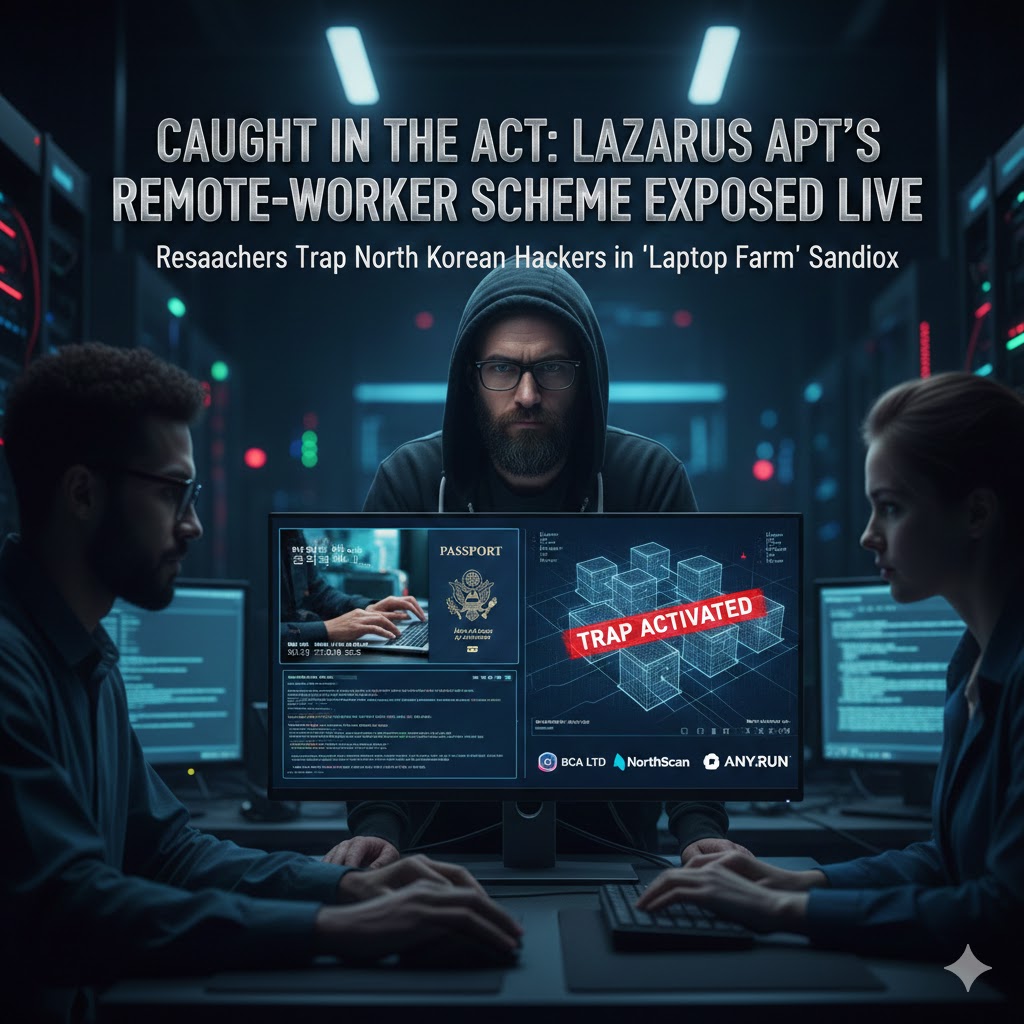
December 2, 2025 – In a world-first for cybersecurity, a team of researchers has successfully observed the infiltration operations of the notorious North Korean hacking group Lazarus, specifically its sub-division Famous Chollima, in real-time. By utilizing sophisticated virtual “sandbox” environments, the team trapped the group’s operators, leading them to believe they were working on real developer computers, while every single move was recorded and analyzed.
The Remote Recruitment Facade
This joint investigation, conducted by Mauro Eldritch (founder of BCA LTD), NorthScan, and the malware analysis platform ANY.RUN, sheds light on one of North Korea’s most persistent infiltration techniques: inserting remote Information Technology (IT) workers into Western companies under false pretenses.
The operation began when a NorthScan researcher posed as a targeted American developer, engaged by a Lazarus recruiter operating under the alias “Aaron” (also known as “Blaze”). This recruiter was acting as a middleman to place North Korean IT workers within various companies, primarily those in the finance, cryptocurrency, healthcare, and engineering sectors.
The scheme followed a well-established pattern:
- Identity Theft: Stealing or borrowing a credible Western identity.
- Interview Passing: Successfully navigating interviews using AI tools and pre-shared answers.
- Remote Work: Working remotely through the victim/interlocutor’s computer.
- Salary Funneling: Remitting a portion of the salary back to the North Korean regime to bypass international sanctions.
The “Laptop Farm” Trap
The decisive phase began when “Blaze” demanded full access to the developer’s laptop, including the Social Security Number (SSN), ID, LinkedIn profile, Gmail account, and 24/7 availability.
Instead of using a real computer, Mauro Eldritch deployed ANY.RUN’s interactive “sandbox” environment. These virtual machines were meticulously configured to look like fully active personal workstations:
- Realistic usage history.
- Developer tools installed.
- Routing through a U.S. residential proxy.
This setup created a false “laptop farm” where researchers could monitor every single action taken by the Lazarus operators. They had the ability to simulate outages, slow down connectivity, and capture snapshots of every step without ever alerting the hackers.
📝 Key Takeaway: The Lazarus Group (also known as APT38, Guardians of Peace, or BlueNoroff) is a North Korean state-sponsored cybercriminal group. Their missions include espionage, sabotage, and, uniquely for a state actor, generating illicit revenue for the regime, particularly through cryptocurrency theft and attacks on the financial sector.
A Crucial Warning
This investigation provides unprecedented insight into the inner workings of Lazarus’s operations, confirming long-held suspicions about their use of fake remote workers to infiltrate Western networks. It underscores the level of sophistication and patience North Korean threat actors exhibit to circumvent sanctions and steal sensitive information or funds.
For businesses, the lesson is clear: strengthening background check processes and identity verification is paramount, even for remote positions.